
LOADING
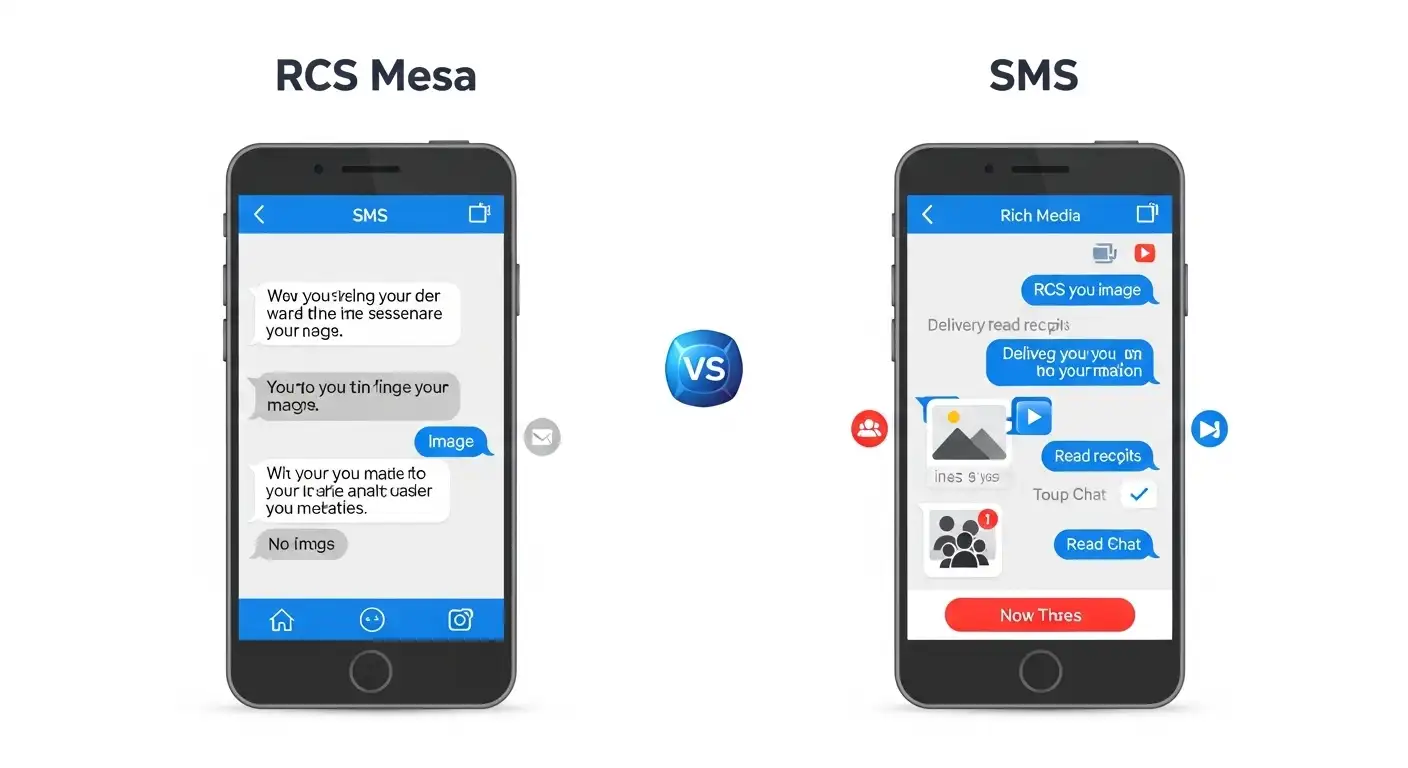
SMS has held the mobile communication backbone over the years. It has been used by businesses to do promotions, reminisces, OTPs, and customer interaction. But technology is changing, and a new standard has emerged known as RCS (Rich Communication Services), which is changing how brands and customers communicate. A great number of companies are now abandoning SMS in favour of RCS due to its more advanced features and increased engagement.
In this blog, we are going to discuss what SMS and RCS are, their differences, and why businesses are moving towards RCS messaging as the next form of communication.
SMS (Short Message Service) has been in use since the early 1990s. It enables users to transmit short text messages of 160 characters. The SMS has been a reliable business communication medium over the years since:
However, SMS has limitations. It is unable to beam pictures, videos and interactive buttons. Businesses are often limited to sending plain text messages, which tend to be outdated compared to modern messaging tools like WhatsApp or Messenger.
SMS has been improved into RCS (Rich Communication Services). It is created to offer a more app-like experience within the default messaging app of Android devices. Businesses can send: not only plain text.
Overall, RCS extends the functionality of social media messaging applications to the native messaging inbox, establishing a professional and interactive communication channel.
Here’s a quick comparison between SMS and RCS:
| Feature | SMS (Short Message Service) | RCS (Rich Communication Services) |
|---|---|---|
| Message Format | Plain text up to 160 characters | Text, images, videos, carousels, and buttons |
| User Engagement | Limited to reading and replying | Interactive with quick replies and CTAs |
| Branding | Generic sender ID, no visual identity | Verified sender with logo and brand colours |
| Analytics | Basic delivery status (sometimes missing) | Detailed reports: delivery, read receipts, clicks |
| Internet Needed | No, works without internet | Yes, requires mobile data or Wi-Fi |
| Customer Experience | Plain and static | Modern, chat-like, engaging |
Increased Interaction – As RCS messages can be accompanied by pictures and interactive features, customers will be more likely to respond to them, as opposed to simple SMS.
Professional Branding – Businesses are able to display their validated brand name and logo, which creates a sense of trust and credibility.
Enhanced Conversion– Through interactive buttons and product carousels, customers can be able to act instantly, and this increases the conversion rates.
Measurable Results – RCS will offer detailed analytics to enable businesses to monitor customer behaviour and optimise campaigns.
Future Ready Communication – With the growth of mobile technology, the world is shifting to RCS, replacing the old-fashioned SMS.
As much as there are benefits of RCS, it also has its limitations:
SMS will be used to maintain simple communication, such as OTPs and alerts, particularly where there is little access to the internet. However, as far as marketing and interaction with customers is concerned, RCS is increasingly becoming a favourite.
Customers will have more enriched and participative interactions in their messaging application as more brands use RCS. In the case of businesses, this implies improved communication, improved relationships and improved ROI.
In the comparison of RCS Message and SMS, there is a stark difference. SMS is straightforward and dependable, yet it is only plain text. RCS, in its turn, builds messaging into a branded and interactive experience that includes pictures, buttons, and analytics.
RCS is not merely an upgrade, but it is the future of businesses intending to remain a pace ahead in communicating with their customers.