LOADING
The logo is the figurehead of the brand. It helps companies create a difference, generate awareness, and develop trust among their listeners. Logos themselves, however, are not the same logos; there are logos on which we can trust, which are of one kind and those on which we are free to trust, which are of another kind. So, it is time now to learn about the top 7 types of logos and in what way they may reflect your brand.
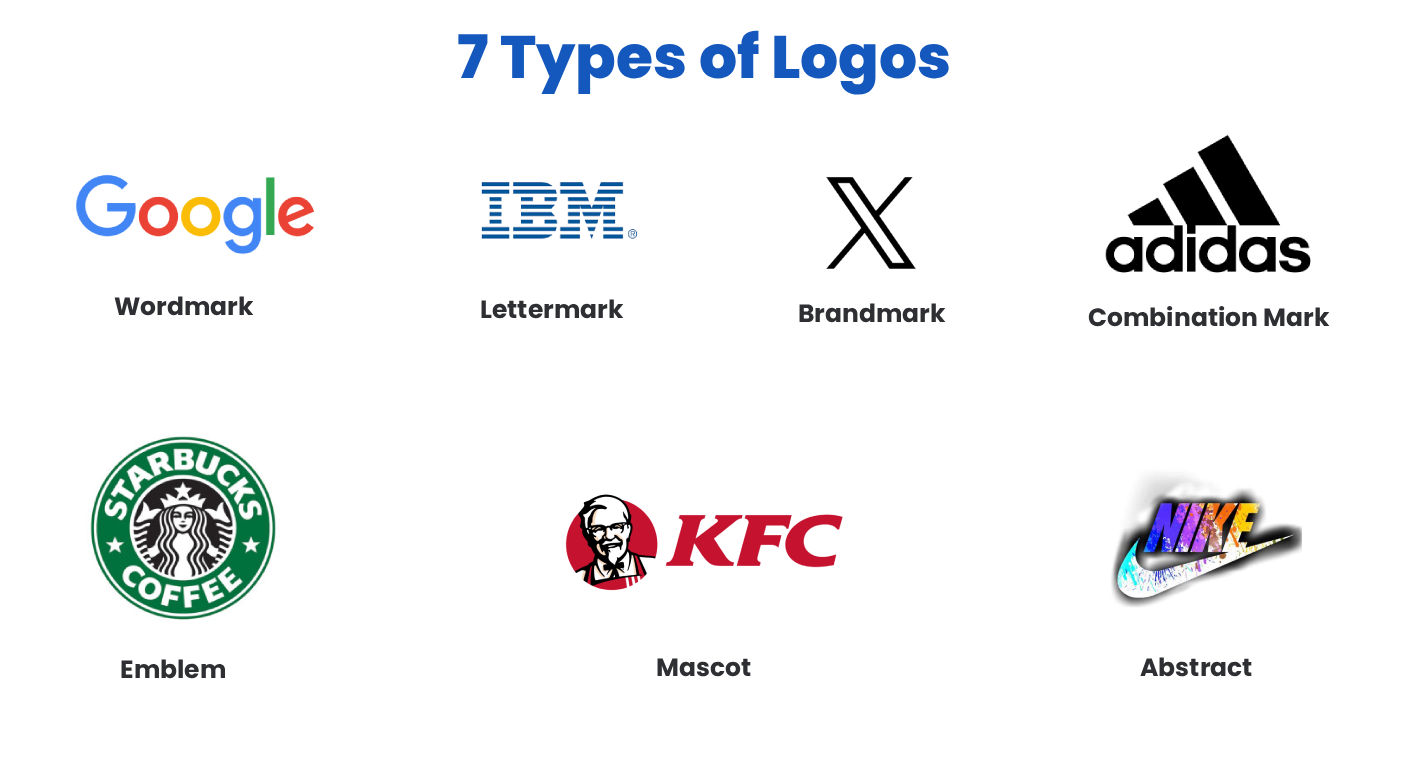
A wordmark logo is a logo that is made up of the name of the brand using a distinguishable font style. It is clean, minimal and typography-centred in branding.
Examples: Google, Coca-Cola
The letter mark logos are designed using initials or abbreviations of long brand names. This gives them an easy recall, and when it comes to appearance, they are attractive.
Examples: IBM, CNN
In brandmark logos, all that is designated to show the brand is a symbol or an icon. Such logos become potent after the brand is sufficiently known.
Examples: Twitter, Apple
A brand is a mixture of writing and a figure or drawing. That means the logo is flexible- either the text or the symbol can be used alone.
Examples: adidas, Burger King
Emblem logos include text within an image, seal or clover. They provide a classy and conservative appearance, one that can be applied by schools, institutions, or heritage brands.
Examples: Starbucks and Harley-Davidson
The mascot logos contain pictured figures that are assigned the identity of the brand. They are entertaining, amusing and excellent in building brand characters.
Examples: KFC, Pringles
Abstract logos involve special shapes and designs that do not resemble anything in the real world, but by designed.
Examples: Nike (Swoosh), Pepsi
Selecting a style of logo would depend on the personality of your brand, and target audience. Your logo design should have content to give you a sense of who you are and affirm those values in your organization.